


Gas sensors - a quick guide
Gas sensors are electronic devices that detect and identify different types of gases.
They are commonly used to detect toxic or explosive gases and measure gas concentration. Gas sensors are oem components of a larger embedded systems employed in factories and manufacturing facilities to identify gas leaks and they are normally connected to an audible alarm or interface. Gas sensors vary widely in range, size, technology, and sensing ability. Depending on their intended environments and functions, the physical makeup and sensing process can vary notably between sensors.
HOW THEY WORK
Gas sensors can be designed and developed with different technologies and working principles - the most relevant of which are:
- Semiconductor - To understand what a semiconductor sensor is, we should first know what a semiconductor is. A semiconductor refers to a material whose electrical conductivity is between that of a conductor and an insulator at room temperature.
Semiconductors are used in integrated circuits, consumer electronics, communication systems, photovoltaic power generation, lighting applications, high-power power conversion and other fields. For example, a diode is a device made of semiconductors. In a vacuum (with no external interference), there are many electrons inside the semiconductor material that can conduct electricity. After the semiconductor contacts the air, it will adsorb oxygen, and oxygen will capture and fix those electrons in the semiconductor.
When the electrons are fixed by oxygen, the resistance of the semiconductor increases; when the gas of interest reacts with oxygen, and the electrons return to the semiconductor, the resistance of the semiconductor decreases. The resistance change is related to the gas concentration. By measuring the resistance change of the semiconductor, the corresponding amount of gas can be known. >>> SEE RELATED PRODUCTS <<< - MPS Molecular Property Spectrometer™ (MPS™) is a patented technology by NevadaNano Inc. The chip incorporates a patented array of micro-cantilevers with integrated piezoelectric sensing elements that provide electrical actuation and sensing of resonance frequency.
Monitoring resonance is a highly sensitive way to measure very small masses of adsorbed analyte.
An array of sensors can be electrically monitored in a low-cost, robust fashion because of the unique piezoelectric configuration the MPS allows.
With its robust industrial design, the MPS doesn’t drift, decay, or poison and requires no maintenance over its lifetime. >>> SEE RELATED PRODUCTS <<< - Electrochemical - Electrochemical sensors use a chemical reaction to measure the concentration of a specific gas in an environment. Electrochemical sensors work by reacting with the gas of interest and producing an electrical signal proportional to the gas concentration. Consisting of two electrodes (a working electrode and a counter electrode), the sensor operates by allowing charged molecules to pass through a thin layer of electrolyte. >>> SEE RELATED PRODUCTS <<<
- NDIR - NDIR (Non-Dispersive Infrared) gas sensors detect decrease in transmitted infrared light which is in proportion to gas concentration. This transmittance, the ratio of transmitted radiation energy to the incident energy, is dependent on target gas concentration. Infrared light that does not interact with the target gas passes through the reference filter. The difference between transmitted light intensities in these two bandwidths is converted into gas concentration. >>> SEE RELATED PRODUCTS <<<
- Catalytic bead - Catalyst sensors have two basic elements: a detector which contains a catalytic material sensitive to flammable gases, and a compensator element which is inert. Combustible gases will burn in the presence of oxygen only on the detector, causing a rise in temperature and a corresponding rise in electrical resistance.
The temperature and resistance of the inert compensator remains the same. A circuit is formed including both elements, and a variable resistor is adjusted to maintain balance in clean air. When combustible gases raise the temperature of the detector and a rise in its resistance, it causes an imbalance in the circuit and produces an output voltage signal. The relative strength of this signal can determine the concentration of flammable gases. >>> SEE RELATED PRODUCTS <<<
WHERE
OEM gas sensors are widely used as core components in portable and fixed gas sensors - these are essential devices to detect gas leakage dangerous for the working personnel in industrial plants such as petrochemical and pharmaceutical plants - in HVAC-R application to detect leakage of refrigerant gases - Hydrogen, methane and butane are common flammable gases in Oil&gas industrial plants - the list of applications is updated everyday and the gas detectors market demand is expected to grow even more in the years to come.
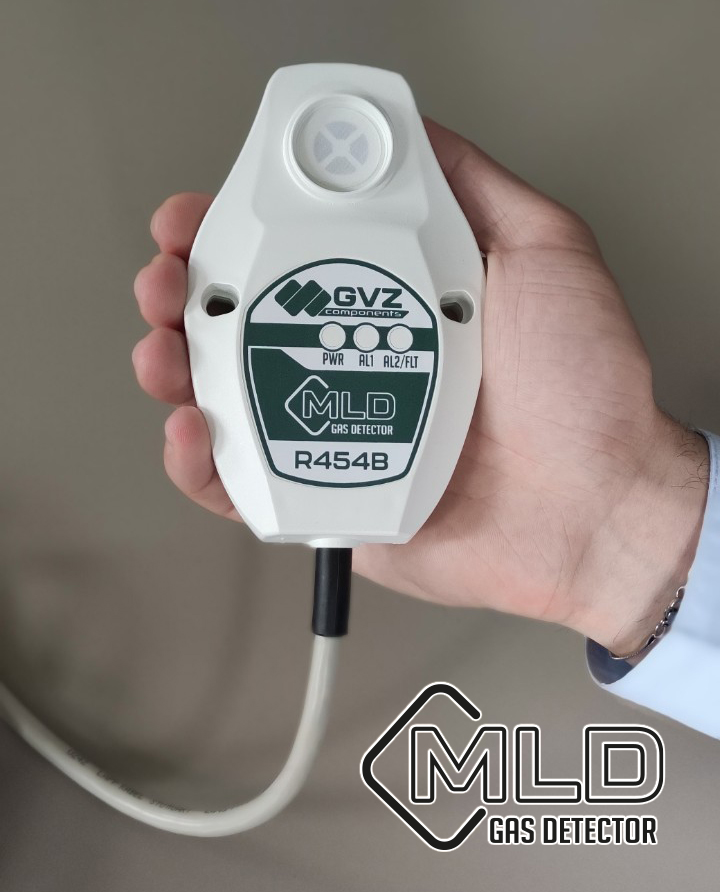 Under this prospect we at GVZ Componets have developed the MLD series, a fixed gas detector specifically calibrated to detect the most requested gases for HVAC application. It uses different gas sensor technologies to better meet our customer requests in terms of detection capabilities, long life, price and performance.
>>> DISCOVER MLD SERIES <<<
We also supply a wide range of gas sensors and technically support our customer to develop their own applications.


